


The Dental Implant Journey: A Step-by-Step Guide From Consultation To Crown

Replacing a missing tooth can feel like stepping into unknown territory. Between the consultation, the surgery, the healing wait, and the final crown, the process looks complicated from the outside. In reality, it is a well-defined sequence that millions of patients complete every year. This guide walks through each stage of a dental implant, explains how long each step actually takes, and compares implants with bridges and dentures so you can weigh the real trade-offs before talking to a provider.
The U.S. tooth-replacement market is large and active. About 3 million Americans already have dental implants, and the number grows by roughly 500,000 each year (source: American Academy of Implant Dentistry). The global dental implant market was projected to reach about $13 billion by 2026 (source: AAID figures). That scale means the clinical playbook is mature, the success data is deep, and the questions patients ask are well understood.
Why the Full Journey Matters More Than the Headline Price
Most first questions are about cost. Cost matters, but it is only one variable. An implant is not a single event. It is a staged treatment where timing, bone health, and aftercare decide whether the result lasts 5 years or 25. Understanding the sequence helps you ask better questions, spot unrealistic "same-day" promises, and judge whether a quote covers the whole path or just the metal post.
The journey has five phases. None can be skipped without raising the risk of failure.
Step 1: Consultation and Treatment Planning
The first appointment lays the foundation. A thorough exam usually includes 3D imaging such as a CBCT scan. The goal is to assess jawbone density, gum health, and the anatomy around the empty space. From that, the clinician builds a personalized plan: how many posts, where they go, whether bone support is enough, and what the restoration will look like.
- What happens: medical history review, exam, X-ray or CBCT scan, discussion of goals.
- Why it matters: placing an implant without checking bone volume is the most common root cause of later failure.
- Time: the planning visit itself is short, typically a single appointment.
Bring a written list of questions. Ask about the expected timeline, what the quoted fee includes, and what happens if additional work is needed. A confident provider welcomes these questions.
Step 2: The Preparatory Phase (When Extra Work Comes First)
Not everyone is ready for surgery on day one. If the bone is too thin or too short, or if active gum disease is present, the clinician may address those first. Common preparatory steps include treating periodontal disease and adding bone volume through a graft or sinus lift.
- Bone graft: healing before implant placement can take 3 to 9 months depending on the procedure (source: Maltepe Dental Clinic treatment timeline).
- Sinus lift: often 6 to 9 months of healing before the implant can be placed.
- Gum disease: must be controlled first, because uncontrolled infection undermines integration.
This phase is the part patients least expect. It does not mean anything went wrong. It means the clinician is building a stable base, which is what protects the long-term result.
Step 3: Implant Placement Surgery
On surgery day, a small biocompatible post, usually titanium, is placed into the jawbone. The procedure is typically done under local anesthesia, so the area is numb and discomfort is managed. Most people describe the experience as no worse than a routine extraction. The surgery itself is brief; the more important clock starts after you leave the chair.
First 24 hours: mild bleeding, swelling, and pressure are normal. Cold compresses, rest, and soft cool foods help. Avoid touching the site, avoid strenuous activity for several days, and do not use straws, since the sucking motion can disturb the clot. Swelling usually peaks around day 2 to 3 and then fades.
Step 4: Osseointegration - The Healing That Decides Everything
After placement, the bone grows around the post and fuses to it. This biological process is called osseointegration, and it is the difference between an implant and a denture. It cannot be rushed.
Realistic timeline: Soft tissue closes in about 1 to 2 weeks, but the bone fusion that gives an implant its stability takes 3 to 6 months (source: gale.care recovery guide; mosdenthospital day-by-day timeline; Maltepe clinic). The crown is not placed until integration is confirmed, usually with X-rays and a stability test. Rushing this phase is the fastest way to cause failure.
The evidence behind that wait is strong. A systematic review of 7,711 implants followed for a mean of 13.4 years found a cumulative survival rate of 94.6 percent with only 1.3 mm of average marginal bone loss (source: Moraschini et al., 2015; PubMed 25467739). Short-term series from 1980 to 2023 consistently report survival of 94.6 to 100 percent for single-tooth implants (source: Maltepe Dental Clinic). A 2024 meta-analysis of 20-year data reported a mean survival rate near 92 percent, meaning roughly 4 of 5 implants remain functional two decades later. Another large cohort study of over 10,800 implants in 4,247 patients reported 96.8 percent survival at 10 years and 94.0 percent at 15 years (source: Journal of Clinical Periodontology).
Two patient factors shift these numbers more than any brand choice: smoking and uncontrolled diabetes. Smoking raises failure risk roughly 2 to 3 times (source: Chrcanovic et al., 2014; cinikdental summary). Non-smokers with good hygiene and controlled health conditions sit at the top of the success range.
Step 5: Abutment and Final Crown
Once integration is confirmed, a small connector called an abutment is attached to the post. After a short healing period of about two weeks, the custom crown is fitted. The crown is shaped and colored to match neighboring teeth so it blends into the smile. At this point the implant functions like a natural tooth for eating, speaking, and daily care.
The titanium post is meant to be permanent. The crown on top is the part that may eventually need replacement, typically after 10 to 15 or 15 to 20 years of normal use (source: CostPrism 2026 guide; clearwaterfamily.dental). Good brushing, flossing, and regular checkups protect that investment.
Implants vs Bridges vs Dentures: The Side-by-Side View
An implant is one of three main ways to replace a missing tooth. The right choice depends on your bone, your neighboring teeth, your budget, and how long you plan to keep the result. The table below compares them using 2026 U.S. pricing and clinical consensus.
| Factor | Dental Implant | Traditional Bridge | Removable Denture |
|---|---|---|---|
| Upfront cost (single tooth) | $3,000 - $6,000 (source: CostPrism 2026; avg ~$4,344 per realdentalcosts) | $2,500 - $6,000 (3-unit) | $1,500 - $3,000 (partial); $1,500 - $5,000 per arch (full) |
| Lifespan | 25+ years, often lifetime | 10 - 15 years | 5 - 10 years, reline every 2 - 5 years |
| Bone preservation | Yes, stimulates jawbone | No, bone loss continues | No, accelerates bone loss |
| Effect on adjacent teeth | None, independent | Yes, grinds down 2 healthy teeth | Minimal (full); clasps on partial |
| Feel and function | Closest to natural tooth | Fixed, near-natural | Can shift or slip while eating |
| Surgery required | Yes | No | No |
| Insurance coverage | Rarely, often treated as elective | Usually partial | Usually partial |
The 25-Year Math: Why Upfront Price Is Misleading
The implant looks expensive on the first invoice. Over time, the math often flips. Because the implant post is permanent and the bridge or denture needs replacement on a cycle, the annualized cost tells a different story.
- Single implant: about $3,000 - $6,000 total over 25 years, roughly $174 - $200 per year (source: realdentalcosts 2026 annualized model; clearwaterfamily note of ~$200/yr at $4,000 - $5,500).
- Bridge: needs replacement about every 10 - 15 years, pushing 25-year cost to roughly $5,000 - $12,000, or $347 - $520 per year (source: CostPrism 2026; alanparnesdds comparison).
- Partial denture: replaced every 5 - 8 years, about $4,500 - $9,000 over 25 years.
The hidden cost in bridges and dentures is bone loss. Only an implant stimulates the jawbone. When the bone under a denture shrinks year after year, the fit changes, facial shape changes, and future implant treatment becomes harder and may need more grafting. Doing nothing also carries a downstream cost: correction later often runs $3,000 - $10,000+ (source: realdentalcosts, citing CareCredit ASQ360 2026 and AARP Apr 2024).
Watch for red flags on "budget" implants. Be cautious if a price sits 30 percent or more below the regional average, if "same-day" treatment skips proper imaging and planning, if the plan is one-size-fits-all, or if warranties and provider credentials are unclear (source: lustrodental red-flags guidance). A low sticker price that omits the abutment, crown, or follow-up visits is not the full cost. Always ask what the quoted fee includes.
Who Is a Good Candidate
In general, anyone healthy enough for a routine extraction can be considered. The strongest predictors of success are within your control:
- Healthy gums with no active disease.
- Enough bone to hold the post, or willingness to do a graft first.
- Non-smoker status, or a plan to quit around treatment.
- Controlled chronic conditions such as diabetes.
- Commitment to daily hygiene and regular dental visits.
Patients with a history of gum disease are not excluded. Studies show high success when the disease is controlled first and a maintenance program is followed, often every 3 to 4 months (source: cinikdental, citing Howe et al. 2019 and Pjetursson et al. 2012).
Frequently Asked Questions
How long does the whole implant process take?
For a straightforward single tooth with adequate bone, plan on about 4 to 7 months from placement to final crown, because osseointegration needs 3 to 6 months. If bone grafting or a sinus lift is required first, add 3 to 9 months of preparatory healing, which can push total treatment past a year (source: clearwaterfamily.dental; Maltepe clinic timeline).
Does the surgery hurt?
Most people describe the discomfort as moderate, similar to or less than a tooth extraction, and it is usually well managed with over-the-counter ibuprofen or acetaminophen. Pain should improve after the first two to three days. Pain that worsens after day three, heavy bleeding beyond the first few hours, or fever over 101 F warrants a call to the provider (source: gale.care recovery guide).
Is an implant always better than a bridge?
For a healthy adult replacing one tooth, an implant is usually the longest-lasting choice: it preserves bone and does not grind down neighboring teeth. A bridge can still be the better fit when implants are not feasible, when adjacent teeth are already crowned, or when a faster, surgery-free fix is preferred. The trade-off is that a bridge relies on, and alters, two healthy teeth and needs replacement every 10 to 15 years (source: clearwaterfamily.dental; CostPrism 2026).
Will insurance or tax-advantaged funds help?
Implants are often treated as elective, so coverage is rarer than for bridges or dentures, though it is slowly improving. Bridges and partial dentures are more likely to receive at least partial coverage. HSA and FSA funds can often be applied to implant costs, effectively reducing them by your marginal tax rate, which is worth raising with a benefits coordinator before deciding (source: alanparnesdds; CostPrism 2026).
Sources and Recommended Resources
- American Academy of Implant Dentistry - implant facts and figures (3 million U.S. patients, 500,000/year growth, $13B market).
- Moraschini V. et al., 2015 - systematic review of 7,711 implants, 94.6 percent 13.4-year survival (PubMed 25467739).
- Maltepe Dental Clinic - implant procedure steps and timeline; 94.6 to 100 percent single-tooth survival 1980 to 2023.
- Journal of Clinical Periodontology - 10,800-implant cohort, 96.8 percent at 10 years, 94.0 percent at 15 years.
- CostPrism 2026 - Dental Implant vs Bridge vs Denture cost and 25-year comparison guide.
- realdentalcosts.com 2026 - U.S. tooth replacement costs and annualized 25-year model (CareCredit ASQ360 averages).
- clearwaterfamily.dental - implants vs bridges vs dentures side-by-side, medically reviewed May 2026.
- gale.care and mosdenthospital.com - osseointegration and day-by-day recovery timelines.
This article is for general education only and is not medical advice. It does not diagnose any condition or recommend a specific treatment, provider, or implant system. Costs and timelines vary by location, provider, bone condition, and insurance. Figures cited reflect 2026 U.S. national averages and published clinical ranges, not a quote for your case. Always consult a licensed dentist or oral surgeon for an examination and a personalized plan. Nothing here is an endorsement of any brand, clinic, or product.


RECOMMEND ARTICLES
How To Compare And Secure The Best Dental Implant Financing Plans In 2026
How To Secure Affordable Dental Implants Without Sacrificing Quality
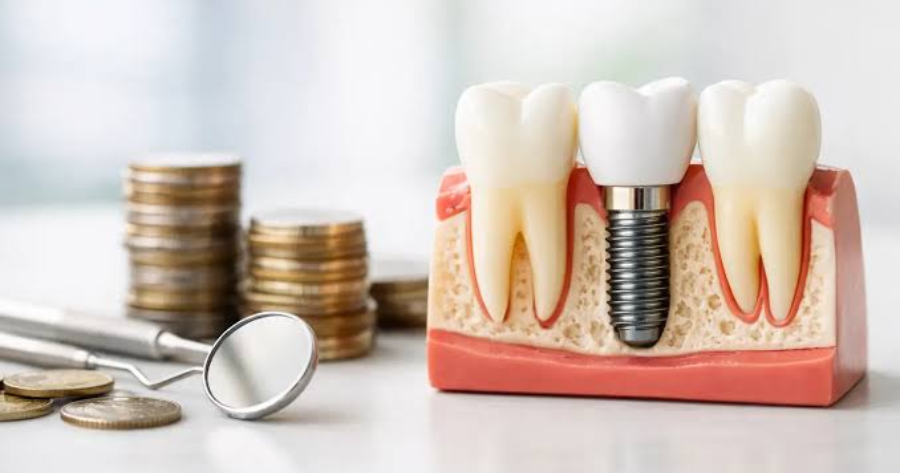
Dental Implant Financing In 2026: How To Build A Payment Plan That Fits Your Budget
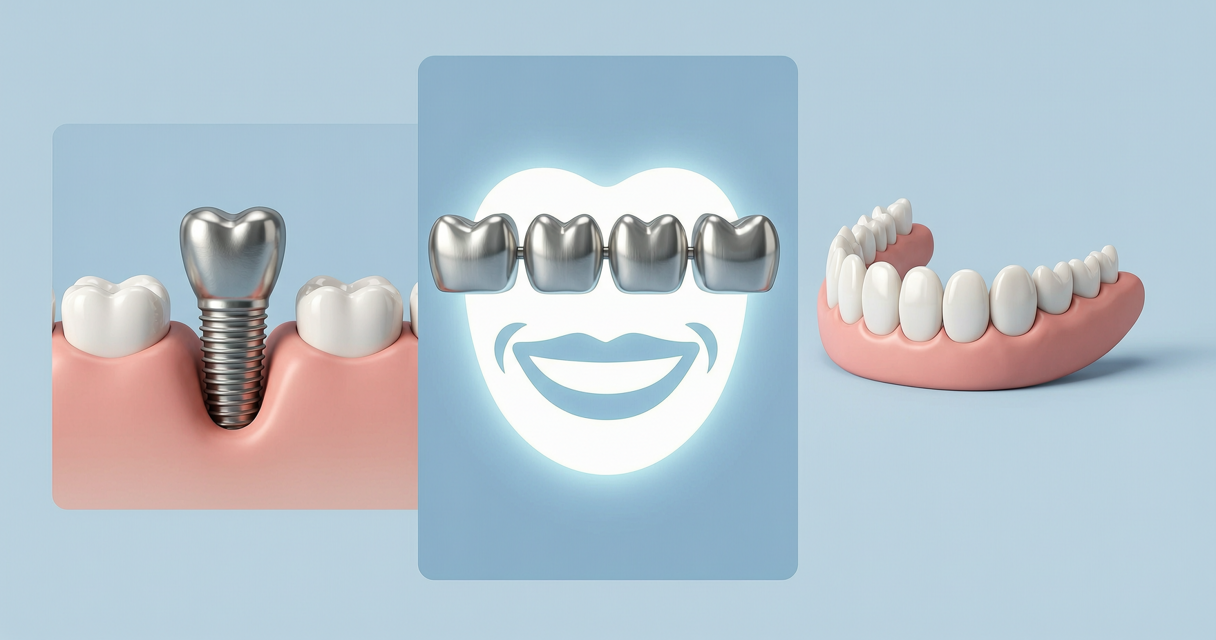
How To Choose Dental Implants Vs Bridges Vs Dentures: Decision-Making For Missing Teeth
Most Read

How To Choose Safe Footwear For Seniors: Fall Prevention & Arch Support Guide

Cash For Cars Services In The US: How Instant Payment Car Selling Works, Benefits, And Top Platforms

How To Assess Your IQ Accurately By Yourself

How To Get A Free Zepeto Outfits That Matches Your Aesthetic

How To Use The Exclusive Switch-on-Phone Guide: Unlock Its Full Advantages

How To Find And Use Minecraft Diamonds: A Complete Player's Guide
Subscribe For New Quizzes


Copyright © 2019-2026 | All rights reserved.