


How To Secure Affordable Dental Implants Without Sacrificing Quality

For many Americans, the biggest barrier to implants is not fear of the procedure, it is the price. A single implant quoted at $3,000 to $6,000 can feel out of reach (source: CostPrism 2026; realdentalcosts 2026). But very few people pay the full sticker price out of pocket. Between insurance, tax-advantaged accounts, financing, and lower-cost providers, there are more ways than ever to make implants affordable. The goal is fair pricing for excellent care, not the cheapest possible job. A poorly placed implant can fail and cost far more to fix than a well-planned one costs up front.
Why Implants Are Worth Paying For
Before cutting cost, be clear on value. Unlike dentures or bridges, implants can last decades and often a lifetime with proper care. They preserve jawbone, protect neighboring teeth, and restore natural eating and smiling. Spread over 20 or 30 years, the per-year cost is remarkably low. One large cohort study of over 10,800 implants in 4,247 patients reported 96.8 percent survival at 10 years and 94.0 percent at 15 years (source: Journal of Clinical Periodontology). That track record is why paying smart, rather than paying least, protects you best.
1. Understand Your Dental Insurance
Many people assume insurance never covers implants. That is not always true. Traditional plans may not cover the post, but many cover part of the crown, and some include implant benefits up to an annual maximum. Call your insurer and ask specific questions: Does my plan cover the crown? Does it cover surgical placement? What is my annual maximum and how much remains? Are there waiting periods for major procedures? Even if dental coverage falls short, your medical insurance might help if tooth loss came from an accident or a medical condition. Ask your dentist for a letter of medical necessity to support the claim.
2. Use Tax-Advantaged Accounts
If you have an HSA or FSA, those pre-tax dollars can pay for implants, effectively discounting the bill by your tax rate. In 2026 the IRS allows $4,400 individual / $8,750 family HSA contributions (plus $1,000 catch-up at 55+) and $3,400 FSA contributions (source: IRS Rev. Proc. 2025-19; IRS Publication 969). For example, using $5,000 of FSA funds in the 22% bracket saves about $1,100 versus after-tax payment. FSAs are usually use-it-or-lose-it, so scheduling treatment before year-end can be smart. HSAs roll over indefinitely and can even be invested.
3. Ask About In-House Financing
Most offices want treatment affordable and offer in-house plans that spread cost over months or years, sometimes with no credit check and no interest. Before signing, read the fine print: the rate after the promo period, late penalties, and whether the plan reports to credit bureaus. If in-house financing does not fit, a personal loan from a bank or credit union is another route. Compare APRs and terms before deciding.
4. Look at Dental Schools and Residency Programs
One of the least-known savings routes is treatment at a dental school, where students work under close faculty supervision at significantly reduced prices. The trade-off is time: appointments run longer and you need more of them. But savings can be dramatic, often 30 to 50 percent below private practice. If you have more time than money and are comfortable with a teaching environment, this is an excellent option. Search for dental schools or implant residency programs in your state.
5. Consider Implant Centers and Multi-Implant Packages
Clinics that specialize in implants often offer package pricing lower than traditional offices. All-on-4 or full-arch packages frequently bundle the implants, abutments, and temporary teeth into one price, which can beat paying per component. Be cautious, though: not all centers are equal, and some prioritize volume over quality. Check credentials, read reviews, and ask to see before-and-after photos. A low price means little if the result is poor.
6. Explore Dental Tourism Carefully
Some Americans travel to Mexico, Costa Rica, or elsewhere for work priced 50 to 70 percent below U.S. rates. The savings are real, but so are the risks: follow-up care is hard if complications arise, standards and materials may differ, legal recourse is limited, and travel time and cost add up. If you consider this route, research the clinic thoroughly, verify the dentist's credentials, and understand the plan for follow-up care back home.
7. Negotiate and Compare Prices
Many patients do not realize implant prices can be negotiable. Get written estimates from at least three providers, and ask what each quote includes (post, abutment, crown, imaging, follow-up). If one is pricier, mention the others and ask if they can match. Ask about discounts for paying upfront, for multiple implants, or for referrals. Some offices offer membership plans or seasonal specials. It never hurts to ask.
Red flags when chasing a low price: advertised prices that cover only part of the procedure; pressure to decide immediately; dentists who skip diagnostic imaging; offers that omit the crown or abutment; hidden fees added after you start. A reputable provider is transparent about all costs and happy to answer questions. Quality should never be sacrificed to save a few hundred dollars, because a failed implant costs far more to correct.
A Realistic Stacking Example
Suppose a single implant is quoted at $4,500. Stacking strategies can cut the out-of-pocket cost sharply. The table below shows one illustrative path; your actual savings depend on your plan, location, and provider.
| Strategy | How It Saves | Approx. Saving |
|---|---|---|
| Dental insurance covers 50% of the crown | Partial coverage of the restoration portion | about $500 |
| FSA funds at a 22% tax benefit on $4,000 | Pre-tax dollars reduce effective cost | about $880 |
| Dental school instead of private practice | 30-50% lower sticker price | about $1,500 |
| Combined out of pocket | From a $4,500 starting quote | below $1,700 |
The more options you explore, the more affordable treatment becomes. Note these figures are illustrative and assume coverage and tax brackets that may not match your situation.
Frequently Asked Questions
What is the cheapest safe way to get an implant?
The lowest safe price usually comes from a dental school (30-50% below private practice) combined with insurance covering the crown and pre-tax HSA or FSA dollars. Avoid any "too good to be true" ad that omits the abutment or crown, since those are required parts of a complete implant.
Does insurance cover the implant post?
Often no, but many plans cover the crown, and some include implant benefits up to an annual maximum. Medical insurance may help if tooth loss was accidental or medical. Always call your insurer with specific questions and ask your dentist for a letter of medical necessity when relevant.
Is dental tourism worth the risk?
It can save 50-70%, but follow-up care, material standards, and legal recourse are weaker. If you go this route, verify credentials, confirm the clinic's complication protocol, and budget for travel and possible return trips. For many patients, a dental school or in-house plan at home is the safer value play.
Can I negotiate implant prices?
Yes. Get at least three written estimates that list every component, then ask higher-priced offices if they can match. Ask about upfront-payment, multi-implant, or referral discounts, and about membership plans. Transparent clinics expect these questions and will itemize costs clearly.
Sources and Recommended Resources
- CostPrism 2026 and realdentalcosts 2026 - single implant $3,000-$6,000 national ranges.
- IRS Rev. Proc. 2025-19 and Publication 969 - 2026 HSA ($4,400 / $8,750) and FSA ($3,400) limits.
- Journal of Clinical Periodontology - 10,800-implant cohort, 96.8% at 10 years, 94.0% at 15 years.
- news-early.uk 2026 affordable implants guide - insurance, schools, tourism, negotiation strategies.
- American Academy of Implant Dentistry - implant value and longevity context.
This article is for general education only and is not medical, financial, or legal advice. It does not recommend any provider, lender, clinic, or treatment, and savings figures are illustrative, not a quote. Insurance coverage, tax rules, and prices vary by plan, state, and provider and change over time. Consult a licensed dentist for a treatment plan, your insurer for coverage, and a tax professional for HSA or FSA questions. Nothing here endorses any brand, clinic, or product.


RECOMMEND ARTICLES
How To Compare And Secure The Best Dental Implant Financing Plans In 2026
Dental Implant Financing In 2026: How To Build A Payment Plan That Fits Your Budget
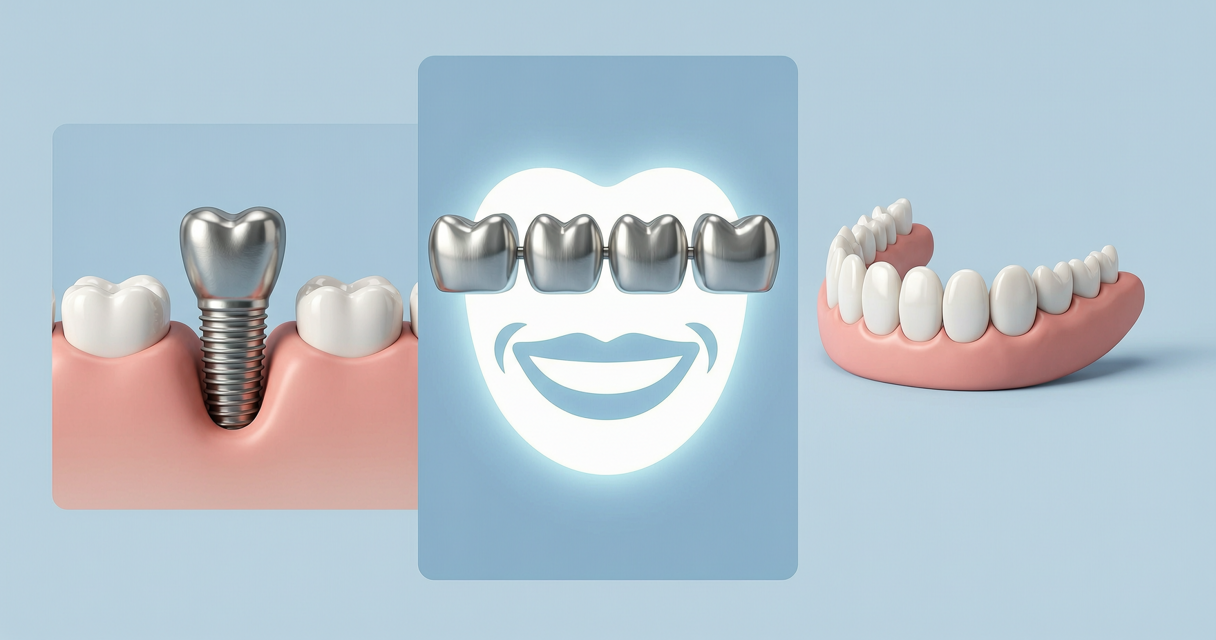
How To Choose Dental Implants Vs Bridges Vs Dentures: Decision-Making For Missing Teeth
The Dental Implant Journey: A Step-by-Step Guide From Consultation To Crown
Most Read

Read Hot Chapters Of Novel The Rejected Luna Queen Online!

Decode 7 Fascinating Fingerprint Types And What They Mean!

How To Achieve Maximum Velocity In Monkey Escape Using The +1 Speed Modifier

5 Retro Gadgets Now Worth Big Money To Collectors

How To Use Aimbot Stably In Fortnite And Bypass Protection Safely

How To Start A Daily Journaling Habit For Better Clarity
Subscribe For New Quizzes


Copyright © 2019-2026 | All rights reserved.